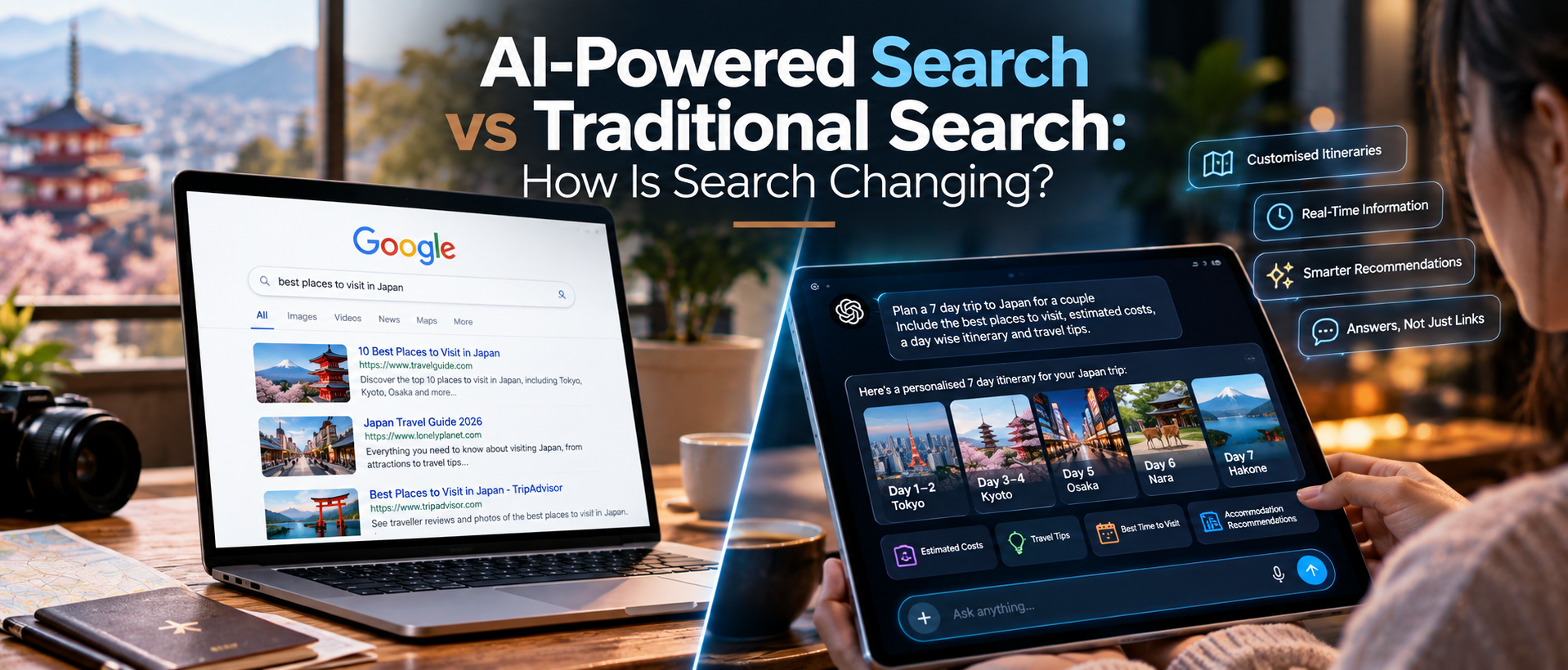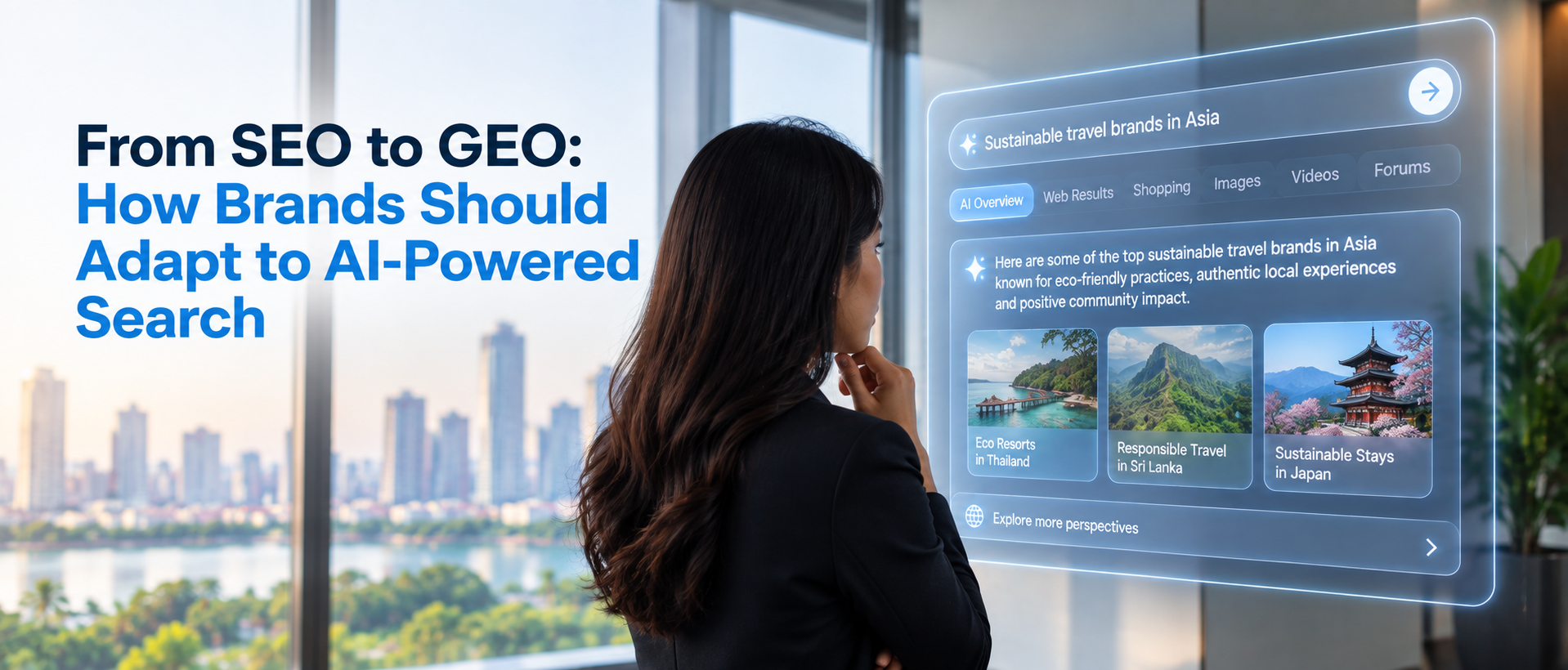

Search is changing, and businesses are beginning to compete for something beyond the familiar first page of Google. As AI-powered platforms answer questions, compare products, and summarise information, appearing in a list of search results is no longer the only way to get discovered.
This shift has brought Generative Engine Optimisation (GEO) into the digital marketing conversation. It reflects a new challenge for brands: making their content useful and credible enough to be included in answers generated by artificial intelligence.
What Is Generative Engine Optimisation?
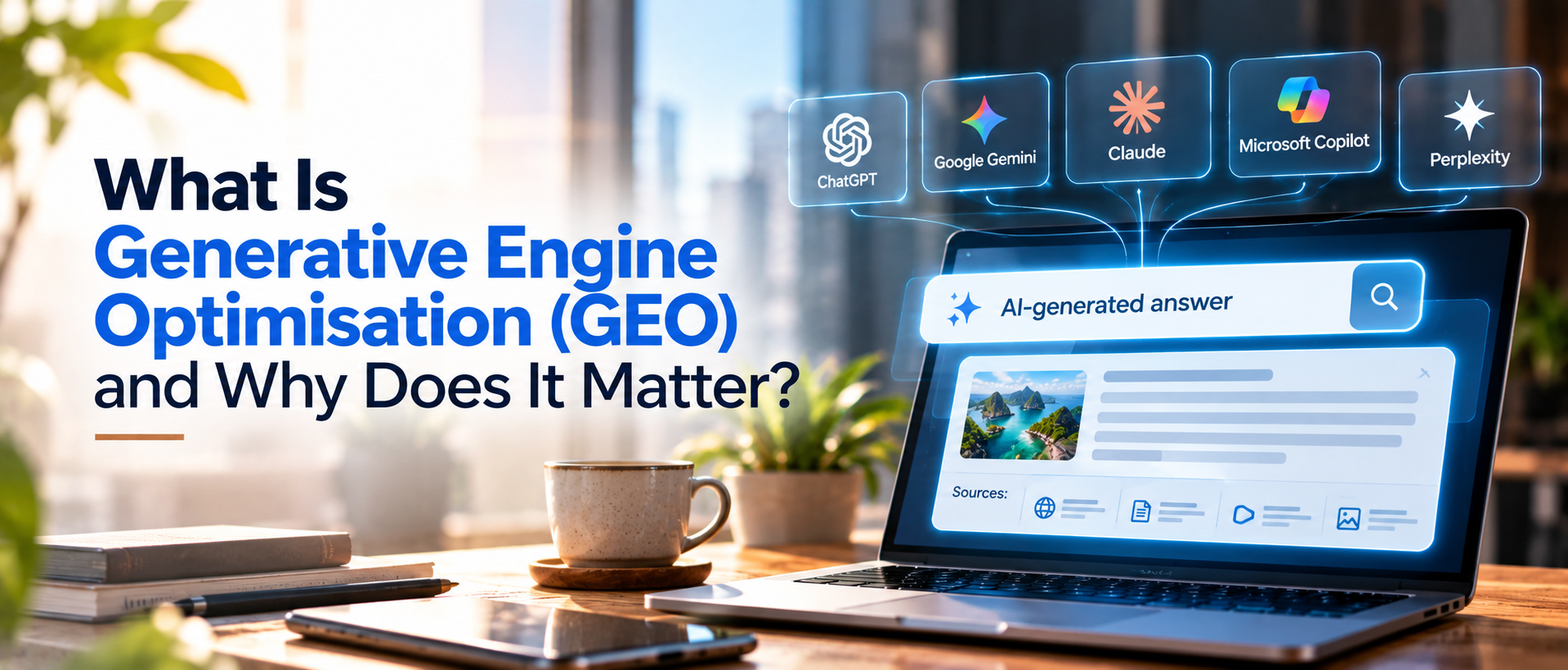
Generative Engine Optimisation, or GEO, is the practice of improving a website’s content and online presence so that AI-powered search platforms can discover, understand, reference, and potentially cite it in their generated responses.
Traditional search engines generally present users with a list of relevant pages. Generative search tools take a different approach. They can retrieve information from multiple sources, combine it, and present a conversational answer, sometimes with links to the sources used.
For example, someone searching for “What are the most affordable project management tools for a small business?” might once have browsed several comparison articles and product websites. With an AI-powered search tool, they may receive a direct comparison, a summary of key features, and a selection of cited sources in one response.
GEO aims to improve the chances that a business’s information becomes part of that answer. It does not guarantee a mention, citation, or recommendation. AI platforms use different systems to select and present information, and their outputs can change from one query to another.
GEO vs Traditional SEO: What Is the Difference?
GEO and traditional Search Engine Optimisation (SEO) share many of the same foundations. Both depend on relevant content, clear information, technical accessibility, and a credible online presence. The difference lies largely in how visibility is achieved and measured.
| Traditional SEO | Generative Engine Optimisation |
| Focuses on visibility in search engine results pages | Focuses on visibility in AI-generated answers |
| Tracks rankings, organic traffic, impressions, and clicks | Tracks AI mentions, citations, source visibility, and referral activity |
| Helps search engines understand and rank web pages | Helps AI systems retrieve, interpret, and use relevant information |
| Often targets keywords and search intent | Also considers conversational questions and follow-up queries |
| Aims to attract users to a website from search results | Aims to make content a useful source within AI-generated responses |
The two approaches are not competing strategies. Strong SEO can support GEO by making content accessible, relevant, and authoritative. However, a high position in conventional search results does not automatically mean a page will be cited by an AI system.
That distinction is important. Businesses need to understand not only where their pages rank, but also whether their information is being used when potential customers ask questions through AI-powered platforms.
Why Is GEO Becoming Important?
The growing use of AI-assisted search is changing how people discover information. Instead of searching with short phrases and opening several links, users can ask detailed questions in natural language and receive a consolidated response.
This affects businesses in several ways.
1. Search Visibility Is Expanding Beyond Google Rankings
Google remains a major part of online discovery, but it is no longer the only place where people look for answers. Tools such as ChatGPT, Perplexity, Google AI Overviews, and other AI-powered experiences have introduced additional ways for users to find information.
A customer researching a service might ask an AI assistant to explain the available options, identify important differences, and suggest questions to ask before making a decision. If a business has useful, reliable information that addresses those needs, its content may become relevant to the response.
For brands, this creates another visibility opportunity. Their digital presence needs to work across both conventional search results and AI-generated experiences.
2. Users Expect More Direct and Conversational Answers
Search behaviour is becoming more conversational. A user might begin with a broad question, then ask several follow-up questions without starting a completely new search.
Consider someone planning to build a website. Their questions may progress from “How much does a business website cost?” to “What features should a small online store have?” and finally to “Which payment gateway works for a Sri Lankan business?”
Content that answers these questions clearly can serve users at different stages of their research. Businesses should therefore think beyond isolated keywords and develop useful resources around the questions their audiences actually ask.
3. Brand Credibility Matters in AI-Generated Responses
AI-generated answers often draw on information from multiple sources. A brand’s own website is one possible source, but independent publications, industry resources, expert commentary, and other credible references can also contribute to how a topic is represented.
This makes brand credibility an important part of GEO. Accurate product information, clear service descriptions, original research, relevant case studies, and trustworthy third-party mentions can help establish a stronger digital presence.
It is worth remembering that visibility and credibility are not the same thing. A business may appear in an AI response without being the most suitable choice for a particular customer. Likewise, a reputable company may not be mentioned in every relevant answer.
4. Website Traffic and Discovery May Change
AI-generated answers can give users useful information without requiring them to visit the original website. This creates a challenge for businesses that have traditionally relied on organic search traffic to generate leads, sales, and enquiries.
At the same time, citations and recommendations can introduce a brand to users who might not otherwise have discovered it. Whether that exposure leads to website visits or conversions depends on the topic, the platform, the user’s intent, and the quality of the answer.
For this reason, businesses should avoid treating website traffic as the only measure of search visibility. AI mentions, referral visits, branded searches, and meaningful enquiries can provide additional insight into how people discover a brand.
How Does GEO Work?
Generative search systems do not all operate in exactly the same way. Some use live web retrieval, while others may rely on different combinations of search indexes, available content, and information learned during model training.
For platforms that retrieve information from the web, the process can involve several stages:
- Discovery: The system finds accessible pages and information that may be relevant to a user’s question.
- Retrieval: It selects material that appears useful for answering the query.
- Interpretation: The AI system processes the retrieved information and identifies relevant facts, explanations, and comparisons.
- Answer generation: It produces a response based on the information available to it.
- Citation or attribution: Depending on the platform, it may show links or identify sources that support parts of the answer.
GEO focuses on improving the likelihood that a brand’s information can participate in this process. Businesses cannot directly control how an AI platform retrieves or presents content, but they can improve the quality, structure, accessibility, and credibility of the information they publish.
Practical GEO Strategies Businesses Can Start Using
GEO does not require businesses to abandon their existing SEO strategies. In many cases, the most useful starting point is to improve the content and technical foundations they already have.
Create Content That Answers Real Questions
Start by identifying the questions customers ask before choosing a product or service. These may include questions about pricing, features, implementation, reliability, comparisons, or common problems.
Build content that answers those questions directly. A page about website development, for instance, could explain the development process, typical project requirements, maintenance considerations, and factors that influence cost.
Avoid writing content simply to repeat a target phrase. A useful answer should provide enough context for readers to understand the topic and make informed decisions.
Use Clear Structure and Descriptive Headings
Well-organised content is easier for people to read and easier for information systems to interpret. Use descriptive headings, short explanatory sections, numbered processes where appropriate, and comparison tables when they genuinely help the reader.
For example, an article comparing two software platforms could include separate sections for pricing, integrations, ease of use, support, and ideal use cases. Each section should make sense on its own while contributing to the overall comparison.
A clear structure does not guarantee an AI citation. It simply makes important information easier to locate and understand.
Support Claims With Evidence
Specific, verifiable information can make content more useful than broad marketing statements. Where appropriate, include original research, relevant statistics, named sources, expert commentary, and practical examples.
If a business publishes a claim about its services, it should be able to support that claim. For instance, a software company could explain how a particular implementation improved a documented process, including the context and limitations of the result.
Research into GEO has explored how content changes such as adding statistics, quotations, and source citations affect visibility in generative responses. A 2024 study introduced the GEO framework and reported visibility improvements of up to 40% in its experimental settings. These findings offer useful evidence, but they should not be treated as a guaranteed result for every website or AI platform.
Build a Consistent and Credible Brand Presence
A company’s website is only one part of its online identity. Relevant industry publications, professional directories, credible reviews, partner websites, and expert contributions can provide additional information about a brand.
Keep essential business details consistent across platforms. This includes the company name, services, location, contact information, product descriptions, and areas of expertise.
The objective is not to manufacture mentions or flood the internet with repetitive promotional content. It is to build a genuine, accurate presence that helps customers and information systems understand what the business offers.
Strengthen Technical Accessibility
Useful content cannot contribute to discovery if relevant systems cannot access it. Review technical SEO fundamentals such as crawlability, indexability, page performance, internal linking, and mobile usability.
Make important information available in readable page content rather than relying entirely on images or interactive elements. Use structured data where it accurately describes the content, and keep key pages current.
Businesses should also review their crawler access settings and understand the policies of the platforms they want to reach. Technical requirements differ, and access for one AI system does not imply access for every other system.
Monitor AI Visibility Alongside SEO Performance
GEO requires a broader approach to measurement. Traditional SEO tools can help track organic rankings, impressions, and clicks, while additional monitoring can examine how a brand appears in AI-generated answers.
A practical monitoring process might include:
- Testing a set of relevant customer questions across selected AI platforms.
- Recording whether the brand is mentioned and whether its website is cited.
- Checking whether the information presented about the business is accurate.
- Reviewing which competing brands or independent sources appear in the same answers.
- Tracking AI referral traffic and branded search activity where analytics data is available.
Because AI responses can vary, a single test is not enough to establish a reliable trend. Repeat queries over time and document the platform, wording, date, and context of each test.
Common GEO Mistakes to Avoid
As GEO attracts more attention, businesses may encounter claims that promise quick or guaranteed visibility in AI search. A cautious approach is important because these systems are complex, frequently updated, and not fully transparent.
Treating GEO as a replacement for SEO is one common mistake. Search engine optimization remains valuable for discovery, technical accessibility, and attracting visitors who want to explore a website. GEO should complement these foundations rather than replace them.
Another mistake is publishing large volumes of shallow, repetitive content in the hope of appearing in more AI answers. More pages do not automatically create more authority. Content should address genuine information needs and provide something useful beyond what is already widely available.
Businesses should also avoid keyword stuffing, fabricated statistics, and unsupported claims. These practices can undermine the quality of a website and damage trust. GEO is not about finding a secret phrase that forces an AI system to mention a brand.
Finally, do not measure success by citations alone. A mention that misrepresents a service or attracts the wrong audience may have little business value. Accuracy, relevance, and the quality of resulting customer interactions matter just as much as visibility.
The Future of GEO and Digital Marketing
GEO is part of a wider change in how information is organised and delivered online. Search is becoming more conversational, and users can increasingly move from a question to a summary, comparison, or recommendation without visiting several websites.
This does not mean traditional search will disappear. People still need original sources, detailed product pages, specialist resources, and direct access to businesses. AI-generated answers also depend on information that exists beyond the answer itself.
For marketers, the practical challenge is to build a digital presence that serves both people and the systems helping them find information. That means publishing accurate content, demonstrating real expertise, maintaining technical accessibility, and understanding how customers discover and evaluate solutions.
Businesses that begin measuring AI visibility now can develop a clearer picture of how this channel fits into their broader marketing strategy. The goal is not to chase every new platform or attempt to control an unpredictable algorithm. It is to become a reliable source of information wherever customers choose to search.
GEO is not a shortcut to online visibility. It is an extension of the work that makes a brand worth discovering in the first place.