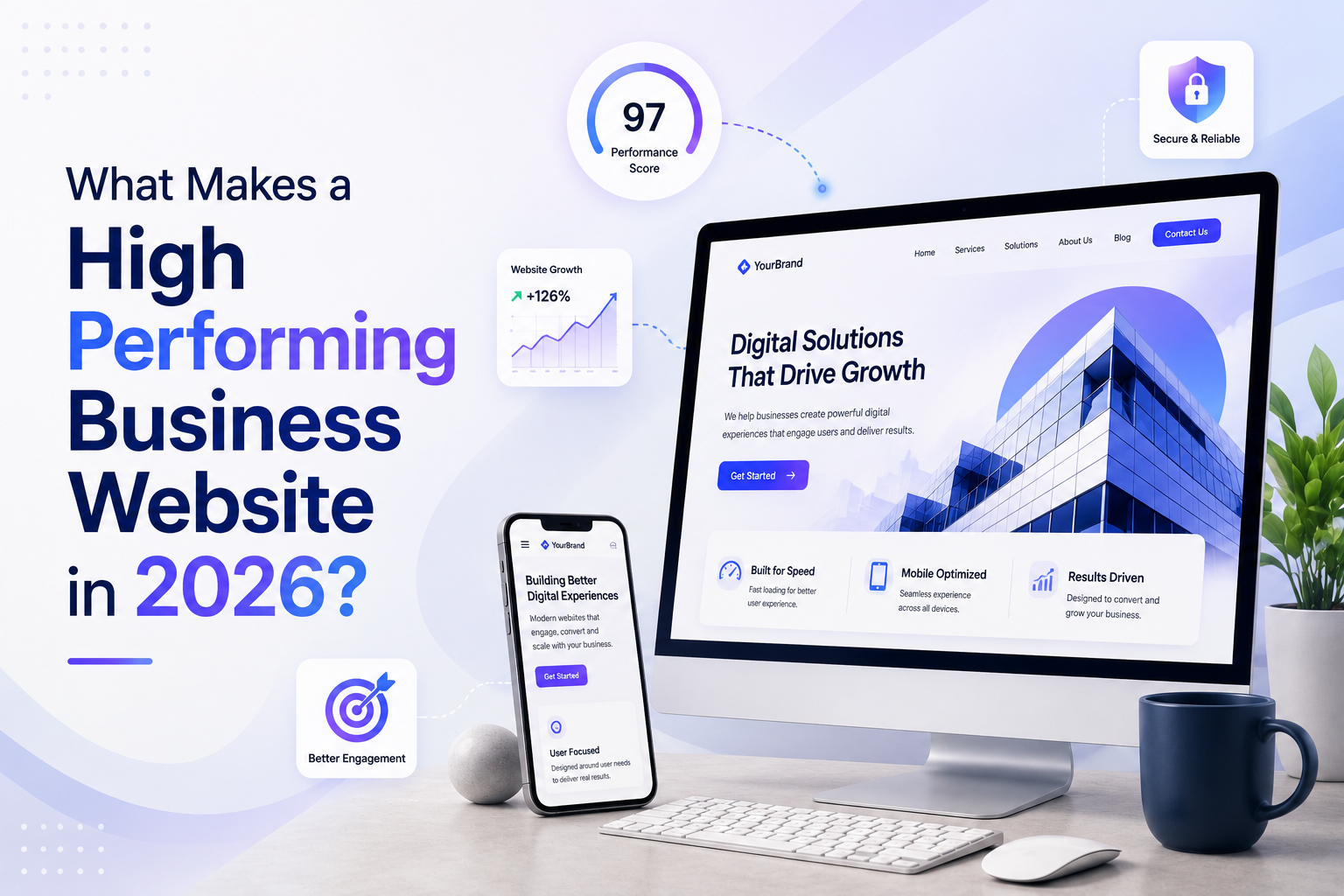

A business website is no longer just an online brochure. In 2026, it serves as a company’s digital storefront, sales representative, customer service channel, marketing platform, and brand ambassador all at once. Whether a business sells products, provides services, generates leads, or builds brand awareness, its website often determines whether a visitor becomes a customer or leaves for a competitor.
Consumer expectations have changed dramatically over the past few years. People expect websites to be fast, intuitive, personalized, secure, and mobile friendly. Search engines and artificial intelligence powered search platforms are also placing greater emphasis on user experience, content quality, and technical performance when determining visibility.
As a result, businesses that want to remain competitive must understand what separates an average website from a high performing one. This article explores the essential elements of a high performing business website in 2026 and why they matter for growth, customer acquisition, and long term success.
Why Your Website Matters More Than Ever
For many businesses, the website is the first interaction potential customers have with the brand.
Before making a purchase or contacting a company, people often visit a website to:
- Learn about products and services
- Compare options
- Read reviews and testimonials
- Evaluate credibility
- Request information
- Make purchasing decisions
A strong website builds trust and encourages action, while a poor website can drive potential customers away within seconds.
Fast Loading Speed Is Essential
Website speed has become one of the most important performance factors.
Modern users have very little patience for slow websites. Studies consistently show that visitors abandon websites that take too long to load.
Why Speed Matters
- Improves user experience
- Increases conversion rates
- Reduces bounce rates
- Supports search engine visibility
- Enhances customer satisfaction
Even a few seconds of delay can significantly impact engagement and revenue.
Businesses should regularly test website performance and optimize loading times across all devices.
Mobile First Design Is No Longer Optional
The majority of web traffic now comes from mobile devices.
A website that performs well on desktop but poorly on smartphones creates a frustrating experience for users.
Mobile Friendly Websites Should Offer
- Responsive layouts
- Easy navigation
- Fast loading speeds
- Readable text without zooming
- Touch friendly buttons and menus
A mobile first approach ensures that visitors can access information easily regardless of the device they use.
Clear User Experience and Navigation
Visitors should be able to find information quickly and effortlessly.
Confusing menus, cluttered layouts, and complicated navigation often cause users to leave before taking action.
Characteristics of Strong Navigation
- Simple menu structures
- Clear page hierarchy
- Logical organization
- Easy access to important information
- Consistent design throughout the site
A well structured website helps users move smoothly through the customer journey.
High Quality Content Remains Critical
Content continues to play a major role in website performance.
Visitors want useful, informative, and relevant information that helps them make decisions.
Effective Website Content Includes
- Service descriptions
- Educational blog articles
- Frequently asked questions
- Case studies
- Customer success stories
- Industry insights
Quality content also supports search engine optimization and improves visibility across traditional and AI powered search platforms.
Strong Search Engine Optimization
Search engine optimization remains one of the most important factors for attracting organic traffic.
However, SEO in 2026 focuses on more than keywords alone.
Modern SEO Priorities Include
- Search intent alignment
- High quality content
- User experience
- Mobile optimization
- Fast loading speeds
- Technical website performance
Businesses that invest in SEO increase their chances of being discovered by potential customers during research and purchasing decisions.
AI Search Readiness Is Becoming Important
Artificial intelligence powered search tools are changing how people discover information online.
Platforms such as ChatGPT, Google AI Overviews, Gemini, and Perplexity increasingly summarize and recommend content directly to users.
To Improve AI Visibility
- Create detailed and authoritative content
- Answer common customer questions
- Structure content clearly
- Demonstrate expertise and credibility
Websites optimized for both traditional search engines and AI driven search experiences gain greater visibility.
Clear Calls to Action
A website should guide visitors toward meaningful actions.
Without clear calls to action, users may leave without taking the next step.
Examples of Effective Calls to Action
- Request a consultation
- Schedule a demo
- Contact us today
- Download a guide
- Start a free trial
- Get a quote
Every page should have a clear purpose and encourage users to move forward.
Trust and Credibility Signals
Trust plays a major role in purchasing decisions.
Visitors often evaluate a company’s credibility before deciding to engage.
Trust Building Elements Include
- Customer testimonials
- Case studies
- Reviews and ratings
- Certifications
- Industry awards
- Security badges
- Professional design
Businesses that establish trust quickly often achieve higher conversion rates.
Personalized User Experiences
Consumers increasingly expect personalized interactions.
Modern websites use data and technology to deliver more relevant experiences.
Examples of Personalization
- Recommended content
- Customized offers
- Location specific information
- Dynamic messaging
- Personalized product suggestions
Personalization improves engagement and creates stronger customer relationships.
Strong Security Measures
Website security has become a business necessity.
Cyber threats continue to increase, making security a critical component of website performance.
Essential Security Features
- Secure connections
- Data encryption
- Regular updates
- Strong authentication systems
- Secure payment processing
Customers are more likely to trust businesses that demonstrate a commitment to protecting information.
Accessibility for All Users
Accessibility is becoming increasingly important from both ethical and business perspectives.
Websites should be designed to accommodate users with different abilities and needs.
Accessibility Features Include
- Readable fonts
- Clear contrast ratios
- Alternative text for images
- Keyboard navigation support
- Screen reader compatibility
Accessible websites improve user experiences and expand audience reach.
Data and Analytics Integration
High performing websites are built on data driven decision making.
Businesses should continuously monitor user behavior and performance metrics.
Key Metrics to Track
- Website traffic
- Conversion rates
- Bounce rates
- User engagement
- Page performance
- Lead generation results
Analytics help organizations identify strengths, weaknesses, and opportunities for improvement.
Seamless Integration With Business Systems
A modern website should not operate in isolation.
It should connect with other business systems to improve efficiency and customer experiences.
Common Integrations Include
- Customer relationship management systems
- Marketing automation platforms
- Email marketing tools
- Customer support software
- E commerce platforms
Integrated systems create smoother workflows and better customer journeys.
Consistent Brand Identity
A website should reflect the company’s overall brand.
Consistency helps build recognition and trust.
Brand Consistency Includes
- Visual design
- Colors and typography
- Tone of voice
- Messaging
- Customer experience
Strong branding creates memorable experiences and differentiates businesses from competitors.
Valuable Educational Resources
Businesses that educate their audiences often establish stronger authority and trust.
Examples of Educational Content
- Blog articles
- Guides and ebooks
- Industry reports
- Webinars
- Frequently asked questions
Educational resources help visitors solve problems and make informed decisions.
Easy Contact and Communication Options
Customers should never struggle to contact a business.
Effective Communication Channels Include
- Contact forms
- Live chat
- Email support
- Phone numbers
- Appointment scheduling
Convenient communication improves customer satisfaction and lead generation.
Continuous Optimization and Improvement
High performing websites are never truly finished.
Consumer behavior, technology, and search algorithms constantly evolve.
Businesses should regularly evaluate:
- User experience
- Content quality
- Technical performance
- Conversion rates
- Search visibility
Continuous improvement ensures that websites remain effective and competitive.
Common Mistakes That Hurt Website Performance
Many websites fail to achieve their potential because of avoidable mistakes.
Common Problems Include
- Slow loading times
- Poor mobile experiences
- Weak content
- Confusing navigation
- Outdated design
- Lack of clear calls to action
- Poor search engine optimization
Addressing these issues can significantly improve overall performance.
The Future of Business Websites
The websites that perform best in 2026 and beyond will combine technology, user experience, personalization, and valuable content.
Future trends are likely to include:
- Greater AI integration
- Advanced personalization
- Voice search optimization
- Interactive experiences
- Enhanced automation
Businesses that adapt to these changes will remain better positioned for long term growth.
A high performing business website in 2026 is much more than a digital presence. It is a strategic business asset that supports marketing, sales, customer service, and brand building.
Fast loading speeds, mobile first design, strong content, search visibility, personalization, security, and seamless user experiences all contribute to website success.
As customer expectations continue to evolve, businesses must view their websites as ongoing investments rather than one time projects. Organizations that continuously improve their digital presence will be better equipped to attract customers, build trust, and achieve sustainable growth in an increasingly digital world.